

Di Cristina Di Silvio e Ph.D. Alberto Flores**
WASHINGTON D.C. Il tempo non scorre accanto: ci attraversa e ci espone alle conseguenze delle fragilità statali.
Il golpe in Guinea-Bissau e la guerra urbana in Sudan dimostrano che la militarizzazione del potere e la decomposizione istituzionale producono collassi rapidi e devastanti.

Analisi tattica e strategica mostrano che non si tratta di eventi isolati, ma di sistemi di crisi già maturi.
Il presente diventa terreno operativo, dove civili e strutture statali sono ostaggi di logiche militari predatrici.
“Il tempo non ci scorre accanto. Ci attraversa.
Non è filosofia astratta: è geopolitica pura. Un continente segnato dal tempo come da una ferita aperta che non riesce a rimarginarsi.
Ogni caduta di uno Stato è anche la caduta di chi lo abita: civili, soldati, famiglie intrappolate tra ordine e caos. In Guinea-Bissau, la democrazia è stata capovolta in una sola notte. In Sudan, la guerra divora città e popolazioni come se il presente fosse un campo minato senza uscita.
Il tempo non passa: si rompe. E dentro la frattura ci siamo anche noi.
Mercoledì scorso non è stato un giorno qualunque.
Il Paese attendeva ancora i risultati delle elezioni del 23 novembre, già segnate da tensioni e accuse di irregolarità. L’aria era densa, come l’umidità della stagione secca. Poi, nel cuore della notte, la democrazia si è spenta. I militari si sono mossi con precisione chirurgica: presidio del palazzo presidenziale, assedio della commissione elettorale, irruzione al ministero dell’Interno, arresto o neutralizzazione di figure chiave dell’apparato statale.
Poche ore dopo, il Generale Horta Nta Na Man veniva proclamato Presidente della transizione.

Il coprifuoco sigillava le strade, le frontiere venivano chiuse, l’ordine costituzionale sospeso.
L’ex Presidente Umaro Sissoco Embaló fuggiva in Senegal, costretto all’esilio.

Ma questo golpe non è un episodio isolato. È la ripetizione di una geometria ricorrente: ogni volta che il potere civile tenta di consolidarsi, viene inghiottito dalle ombre interne delle forze armate, dai legami clanici, dalle rivalità personali che precedono la legge. In Guinea-Bissau, il passato non se ne va. Ritorna. In uniforme.
Il colpo non è stato improvvisato: è stato quasi dottrinario. I militari hanno colpito i tre punti vitali di uno Stato fragile: Legittimità: neutralizzando presidenza e commissione elettorale; Comunicazione: isolando ministeri e snodi informativi; Forza pubblica: inglobando o paralizzando le unità fedeli al Governo.
La catena di comando, in Guinea-Bissau, non è una struttura: è una rete contaminata da clan, lealtà mobili, rivalità storiche. Per questo il golpe è stato “silenzioso”: non ha trovato veri oppositori. La giunta non ha dovuto conquistare lo Stato.
Ci era già dentro. Il colpo di Stato non è l’inizio della crisi: è la sua naturale maturazione. Un frutto amaro caduto da un albero con radici troppo fragili per sorreggere la democrazia. Se la Guinea-Bissau crolla in una notte, il Sudan cade da anni.
La guerra iniziata nell’aprile 2023 è diventata un sistema autonomo: un’economia, una geografia, una struttura sociale fondata sulla violenza e sulla fuga. Lo Stato si è ridotto a un fantasma. L’assedio e la successiva caduta di El Fasher, nel Darfur settentrionale, rappresentano uno dei capitoli più tragici.
Per mesi, non più misurabili con esattezza, la città è stata strangolata: cibo e acqua tagliati, ospedali bombardati o saccheggiati, quartieri rasi al suolo, civili massacrati o costretti alla fuga.
Nelle ultime settimane, oltre 10 mila persone hanno lasciato la città, molte senza riuscire a sopravvivere al viaggio.
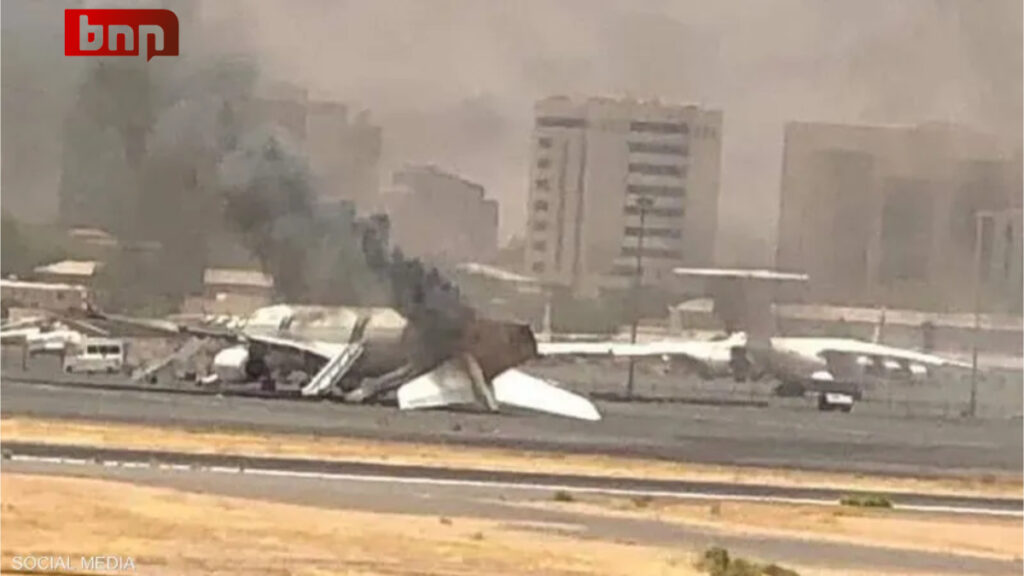
La milizia paramilitare RSF non combatte una guerra convenzionale. Ha sviluppato una strategia ibrida e brutale che combina: logoramento totale (assedio, soffocamento delle risorse), mobilità irregolare (pick-up, moto, droni modificati), terrore psicologico, predazione economica (miniere, traffici illegali, tassazioni di guerra), frammentazione sociale (sfollamenti di massa, deportazioni, stupri sistemici). El Fasher non è stata una semplice conquista.
È stata una lezione oscura di guerra urbana moderna: l’obiettivo non è governare il territorio, ma svuotarlo, fino a renderlo controllabile senza amministrarlo. La RSF non vuole governare El Fasher. Vuole impedire che qualcun altro possa farlo.
È la guerra come de-istituzionalizzazione permanente.
Il Sudan oggi è uno dei punti più bui del pianeta. Un buio che si espande. Che cosa lega un golpe in Africa occidentale e una guerra genocidaria in Africa orientale? Una risposta spietata: la fragilità dello Stato come condizione permanente.
In Guinea-Bissau, lo Stato è fragile perché non ha basi: galleggia sugli interessi militari. In Sudan, lo Stato è fragile perché è stato divorato da milizie più veloci, più ricche, più spietate del governo che avrebbero dovuto servire.
Il passato, colpi di Stato, guerre, colonialismo, confini mal tracciati, non se ne va.
Rimane nelle istituzioni, nelle caserme, nelle armi. Il futuro, pace, stabilità, ricostruzione, rimane sospeso.
Possibile, ma non garantito. Il presente diventa un campo di battaglia.
Gli osservatori internazionali condannano.
I Governi tentennano.
Le ONG implorano corridoi umanitari che non arrivano. E la notte si allunga. A Bissau come a Darfur. Il tempo non passa. Ci attraversa. E ci chiede, senza più possibilità di fuga: vogliamo continuare a guardare mentre gli Stati cadono?
O vogliamo intervenire prima che il continente diventi una geografia di silenzi e fumo? La scelta non è più rimandabile. Il futuro, quel futuro sospeso, aspetta solo di essere scelto.
ENGLISH VERSION
Africa: State Fractures: Guinea-Bissau and Sudan in the Vortex of Collapse. Civilians, soldiers, families trapped between order and chaos
By Cristina Di Silvio and Ph.D. Alberto Flores and 1º MINISTER OF FOREIGN AFFAIRS, UNITED STATES
WASHINGTON D.C. Time does not move beside us; it cuts through us, exposing the consequences of state fragility.
The Guinea-Bissau coup and the urban warfare in Sudan demonstrate that militarization of power and institutional collapse produce rapid, devastating breakdowns.
Tactical and strategic analysis showsthese are not isolated events, but mature crisis systems. The present becomes operational ground, where civilians and state structures are hostages to predatory military logic.
“Time does not move beside us. It moves through us.” This is not abstract philosophy; it is geopolitics stripped to the bone. A continent carved open by time like a wound that refuses to close. Every state’s collapse is also the collapse of those who inhabit it: civilians, soldiers, familiestrapped between order and chaos. In Guinea-Bissau, democracy was overturned in a single night. In Sudan, war devours cities and communities as if the present were a minefield with no escape.

Time does not pass: it shatters. And inside that fracture, we stand as well. 26 November 2025 was no ordinary day. The country was still waiting for the results of the 23 November election, alreadyclouded by tension and accusations of irregularities.
The air was thick, heavy like the humidity of the dry season. Then, deep in the night, democracy went dark.
The military moved with surgicalprecision: securing the presidential palace, besieging the electoral commission, storming the ministry of the Interior, arresting or neutralizing key figures in the state apparatus. Hours later, General Horta Nta Na Man was proclaimed Transitional President.
Curfew sealed the streets. Borders snapped shut. The constitutional order dissolved.
Former President Umaro Sissoco Embaló fled into exile in Senegal. But this coup is not an isolated rupture. It is the repetition of a familiargeometry: whenever civilian power tries to take root, it is swallowed by the inner shadows of the armed forces, by clan networks, by rivalries older than the law itself.
In Guinea-Bissau, the pastdoes not fade. It returns, in uniform.
The coup was anything but improvised; it was almostdoctrinal.
The military struck the three vital points of a fragile state: Legitimacy: neutralizing the presidency and the electoral commission; Communication: isolating ministries and informationnodes; Security forces: absorbing or paralyzing units loyal to the government. In Guinea-Bissau, the chain of command is not a structure; it is a web tainted by clans, shifting allegiances, and historicalgrievances.
That is why the coup was “silent”: it faced no real resistance. The junta did not have to seize the state. It was already lodged within it. The coup was not the beginning of the crisis; it wasits natural ripening.
A bitter fruit falling from a tree whose roots were too frail to support democracy.
If Guinea-Bissau collapses overnight, Sudan has been collapsing for years. The warthat erupted in April 2023 has evolved into an autonomous system: an economy, a geography, a social order built on violence and displacement. The state has thinned into a ghost. The siege and subsequent fall of El Fasher in North Darfur mark one of the darkest chapters of this long disintegration.
For months, no longer countable with precision, the city was strangled: food and water cut, hospitals bombed or looted, neighborhoods flattened, civilians massacred or forced to flee. In recent weeks, over 100,000 people have escaped the city, many unable to survive the journey.

in Sudan
The paramilitary RSF does not wage conventional war.
It has crafted a hybrid, brutal strategy that blends: total attrition (sieges, resource suffocation), irregular mobility (pickups, motorbikes, modified drones), psychological terror, economic predation (mines, illicit trade, wartime taxation), social fragmentation (mass displacement, deportations, systematic sexual violence). El Fasher was not merely conquered.
It became a dark lesson in contemporary urbanwarfare: the goal is not to administer territory but to empty it, until it can be controlled withoutgoverning it.
The RSF has no desire to rule El Fasher. Its aim is to prevent anyone else from doingso.
This is war as permanent de-institutionalization.
Sudan today is one of the darkest places on earth.
A darkness that spreads. A brutal truth: state fragility as a permanent condition.
In Guinea-Bissau, the state is fragile because it has no foundations: it floats on military interests. In Sudan, the state is fragile because it has been devoured by militias faster, richer, and more ruthless than the government they once served. The past, coups, wars, colonial borders, never departs.
It lingers in institutions, barracks, weapons. The future, peace, stability, reconstruction, remains suspended.
Possible, but not assured. The present becomes a battlefield. International observers condemn. Governments hesitate. NGOs plead for humanitarian corridors that never come. And the night grows longer. In Bissau as in Darfur. Time does not pass. It passes through us.
And it asks us, leaving no room for escape: will we keep watching as states collapse? Or will we act before the continent becomes a geography of silence and smoke? The choice can no longer be deferred. The future, that suspended future, waits to be chosen.
**Legal Advisor of the Int. Inst. Diplomat relations. Commission for Human Rights Economic and Social Affairs of the UNITED NATIONS; Director Of Legal Affairs And Treaty Compliance United States GOEDFA;
**1º Minister of Foreign Affairs United States of America
© RIPRODUZIONE RISERVATA