By Cristina Di Silvio*
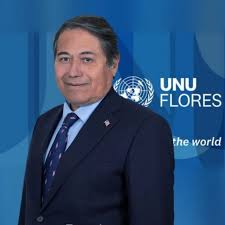
NEW YORK. Few voices in today’s geopolitical landscape speak with the moral clarity of UN Minister Alberto Flores Hernández when reflecting on the war in Ukraine, a clarity shaped not by ideology, but by decades spent at the frontlines of diplomacy.
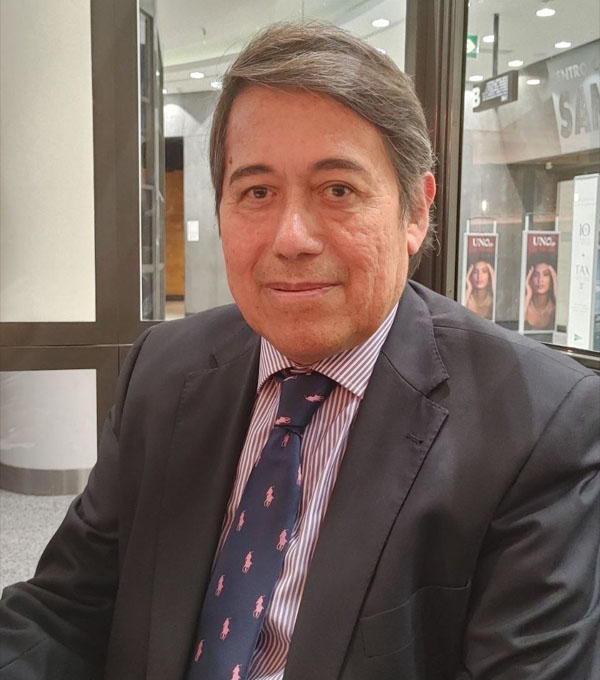
We meet in his New York office in the late afternoon.
Outside, the city pulses with its familiar urgency; inside, the room feels suspended between maps, security briefings, and diplomatic dossiers.
Yet the atmosphere is surprisingly human. Flores doesn’t merely comment on global affairs.
He inhabits them “International law is not a technicality, it is the last wall before chaos.” “Cristina, let me be unequivocal,” he begins, leaning forward as if to emphasize that some truths require proximity to be fully understood. “Peace is always the ultimate horizon.
But peace cannot be achieved by legitimizing aggression or conceding sovereign territories under coercion.” He speaks of Article 2(4) of the UN Charter, of the Helsinki Final Act, of ICJ jurisprudence- not as procedural references, but as structural beams of global stability.

“A territorial transfer imposed by force is not a peace agreement – Flores says -. It is a capitulation of law. And when the law capitulates, the entire system of global trust collapses: security frameworks, reconstruction efforts, investor confidence… everything. Flores’s tone softens, though the substanceremains sharp. “History teaches us that territorial concessions don’t end conflicts,” he explains.
“They embolden them. Putin would interpret such a move not as closure, but as validation, a greenlight for future expansion.
What sets Flores apart is his ability to translate geopolitical fracture linesinto human consequences. The moral dimension of diplomacy is never far from the surface of hisanalysis.
Despite the gravity of the situation, Flores is not resigned. There is a visible confidence, almost an insistence, that solutions are still within reach.
“There is a pathway to peace,” he insists. “But it must rest on four pillars: legality, collective security, multilateral dialogue, and responsibledevelopment.”He sketches an architecture of stability: strengthened UN–OSCE security guarantees, an inclusive international peace conference, a reconstruction fund protected by robust legal safeguards, diplomacy rooted in cultural and academic exchange. This is not improvisation. It is a design, carefully conceived and globally informed.
Then the conversation takes a more personal turn.
Flores sets his documents aside and speaks with a warmth that momentarily breaks the formality of his office. “Cristina, there is something I want to acknowledge, something that honorsyou, but also the values we defend as diplomats”.
He refers to the communication he received from the United States: in November 2025, I was awarded the Official Letter of Recommendation from the Office of International Affairs and Strategic Partnerships at Harvard University. Suchinstitutional recommendations are exceptionally rare, typically reserved for individuals whoseimpact extends beyond academia into the architecture of global governance.
Flores quotes directly from Harvard’s statement: “Harvard University is honored to extend its highest institutional recommendation to Dr. Cristina Di Silvio, an eminent expert in international relations, comparative law, and multilateral diplomacy, whose distinguished career has earned recognition across global academic, legal, and strategic forums”.
He continues, with unmistakable respect: “Dr. Di Silvio hasdemonstrated exceptional excellence in her roles, and her contributions to multilateral treaty frameworks within the United Nations system reflect a first-class diplomatic and legal capacity”.
And then the line that crystallizes Harvard’s endorsement: “Harvard recognizes in Dr. Di Silvio an intellectual and diplomatic ally of excellence, whose humanistic vision, professional ethics, and commitment to peace and sustainable development deserve the endorsement of the highest institutions”.
Flores pauses before adding, in his own words: “This recognition is not simply an honor for you, Cristina. It strengthens the very idea that integrity, multilateralism, and humanisticdiplomacy remain indispensable to the international community.”
As the interview concludes, Flores offers a final thought, not rehearsed, but profoundly held.
“We must never confuse peace with surrender. True peace demands legality, accountability, and a collective commitment to protectsovereignty. If occupied territories are given away today, conflicts will spread tomorrow”.
He rises, and the room seems to shift back into motion, as if history itself were waiting outside the door. Leaving his office, I am struck by the impression that Alberto Flores is not merely a UN Minister. He is a custodian of principles essential to the world’s equilibrium.
For him, peace is not simply the absence of conflict, it is the presence of justice and the courage to defend it.
VERSIONE ITALIANA
ESCLUSIVA. Diplomazia: “La pace non si può barattare”: Conversazione con il Ministro ONU Alberto Flores Hernández
Di Cristina Di Silvio*
NEW YORK. Poche voci, nel panorama geopolitico contemporaneo, parlano con la chiarezza morale del ministro delle Nazioni Unite Alberto Flores Hernández quando affronta il tema della guerra in Ucraina.
Una chiarezza che non nasce dall’ideologia, ma da decenni trascorsi sulla linea sottile e complessa della diplomazia internazionale. Ci incontriamo nel suo ufficio di New York nel tardo pomeriggio.
Fuori, la città pulsa con la sua consueta urgenza; dentro, la stanza sembra sospesa tra mappe, briefing di sicurezza e dossier multilaterali. Eppure, l’atmosfera è sorprendentemente umana. Flores non si limita a commentare gli affari del mondo.
Li abita. “Il diritto internazionale non è una formalità: è l’ultimo muro prima del caos”“Cristina, sarò chiaro,” esordisce inclinando il corpo in avanti, come per ricordare che alcune verità richiedono vicinanza per essere comprese appieno. “La pace è sempre l’orizzonte finale. Ma non può essere raggiunta legittimando l’aggressione o cedendo territori sovrani sotto coercizione.” Cita l’Articolo 2(4) della Carta delle Nazioni Unite, l’Atto Finale di Helsinki, la giurisprudenza della Corte Internazionale di Giustizia.
Non come riferimenti tecnici, ma come colonne portanti dell’ordine globale. “Un trasferimento territoriale imposto con la forza non è un accordo di pace,” afferma. “È una capitolazione del diritto. E quando il diritto capitola, crolla l’intero sistema di fiducia globale: i quadri di sicurezza, gli investimenti, la ricostruzione… tutto.” Le sue parole non solo informano: risuonano.
Il tono del ministro si addolcisce, ma la sostanza resta affilata.

“La storia ci insegna che le concessioni territoriali non chiudono i conflitti,” prosegue. “Li alimentano. Putin leggerebbe un cedimento non come segnale di pace, ma come una validazione, un via libera per future espansioni”.

Ciò che distingue Flores è la capacità di tradurre linee di frattura geopolitiche in conseguenze umane. L’etica, nella sua diplomazia, non è un accessorio: è un criterio guida.
Nonostante la gravità del quadro, Flores non è pessimista.
Trasmette anzi una fiducia netta, quasi ostinata, che soluzioni reali siano ancora possibili. “Esiste un percorso verso la pace,” insiste. “Ma deve poggiare su quattro pilastri: legalità, sicurezza collettiva, dialogo multilaterale e sviluppo responsabile”.
Traccia così un’architettura di stabilità: garanzie ONU–OSCE rafforzate, una conferenza internazionale realmente inclusiva, un fondo di ricostruzione tutelato da solide garanzie giuridiche, diplomazia preventiva basata su scambi culturali e accademici.
Non è improvvisazione. È progettazione. Poi la conversazione prende una piega più personale.
Flores posa i documenti e parla con un calore che, per un istante, rompe la compostezza del suo ruolo. “Cristina, c’è qualcosa che desidero riconoscere. Qualcosa che onora lei, ma anche i valori che difendiamo come diplomatici.
”Si riferisce alla comunicazione ricevuta dagli Stati Uniti: nel novembre scorso, ho ottenuto la Official Letter of Recommendationdell’Office of International Affairs and Strategic Partnerships di Harvard University. Raccomandazioni istituzionali di questo livello sono rarissime, riservate a figure il cui impatto supera i confini dell’accademia e incide concretamente sull’architettura della governance globale. Flores cita testualmente il documento di Harvard: “Harvard University is honored to extend itshighest institutional recommendation to Dr. Cristina Di Silvio, an eminent expert in international relations, comparative law, and multilateral diplomacy, whose distinguished career has earnedrecognition across global academic, legal, and strategic forums”.
Prosegue, con rispetto evidente: “Dr. Di Silvio has demonstrated exceptional excellence in her roles, and her contributionsto multilateral treaty frameworks within the United Nations system reflect a first-class diplomatic and legal capacity.”
E poi la frase che sintetizza l’endorsement istituzionale: “Harvard recognizes in Dr. Di Silvio an intellectual and diplomatic ally of excellence, whose humanistic vision, professional ethics, and commitment to peace and sustainable development deserve the endorsement of the highest institutions.
”Dopo aver letto, Flores aggiunge le sue parole: “Questo riconoscimento non è soltanto un onore personale, Cristina. Rafforza l’idea che integrità, multilateralismo e diplomazia umanistica restino indispensabili per la comunità internazionale”.
In un’epoca dominata dalla velocità e dal rumore, la sua sincerità appare quasi sovversiva.
Quando l’intervista volge al termine, il ministro offre un pensiero non preparato, ma profondamente sentito. “Non dobbiamo mai confondere la pace con la resa- afferma -. La vera pace richiede legalità, responsabilità e un impegno collettivo a proteggere la sovranità. Se oggi si cedono territori occupati, domani i conflitti si estenderanno”.
Si alza, e sembra che la stanza torni in movimento, come se la storia stessa fosse in attesa oltre la porta.
Uscendo dal suo ufficio, ho la sensazione che Alberto Flores Hernández non sia soltanto un Ministro dell’ONU. È un custode di principi che restano essenziali per l’equilibrio del mondo. Per lui, e per chi lo ascolta, la pace non è semplicemente assenza di conflitto.
È presenza di giustizia. E coraggio nel difenderla.
*Legal Advisor of the Int. Inst. Diplomat relations. Commission for Human Rights Economic and Social Affairs of the UNITED NATIONS; Director Of Legal Affairs And Treaty Compliance United States GOEDFA; Director of International Relations for the European Community UNITED STATES FOREIGN TRADE INSTITUTE)
©️ RIPRODUZIONE RISERVATA