
By Vani Rao*
LIVORNO. There are moments in diplomacy when geography becomes destiny.
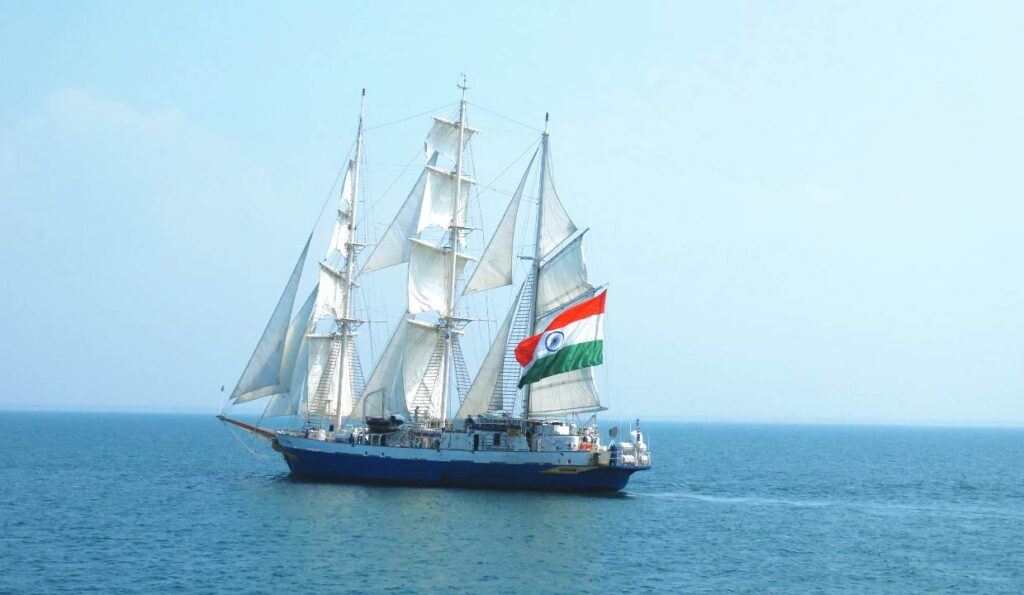
INS Sudarshini, the Indian Navy’s magnificent three-masted sailing training ship, will enter the harbour of Livorno this week.
It is not just the arrival of an Indian naval vessel in an Italian port, it will bring together the maritime traditions of the two countries, whose histories have long been connected by the sea.
As peninsular nations, for Italy and India the oceans have facilitated commerce, culture and civilizational exchange for thousands of years.
The Mediterranean and the Indian Ocean have always been linked through merchants, explorers, scholars and others connecting the two ancient civilisations.
INS Sudarshini a sail training ship built by Goa Shipyard for the Indian Navy, was commissioned in 2012 for global operations, fostering basic seamanship and character building.
The name Sudarshini translates as “beautiful lady”.
The 54 metres long ship has 20 sails with a total area of approximately 1,035 square metres.
She hosts a crew of 45 including officers and sailors. The young naval cadets are being trained in the art of sailing, navigation and seamanship, alongside leadership, resilience, teamwork and the responsibilities of command.
INS Sudarshini undertook Lokayan 2026, a transoceanic sailing expedition covering more than 22,000 nautical miles and visiting Eighteen ports in Thirteen countries across the world.
Engaging in maritime diplomacy, Sudarshini reflects India’s ancient seafaring heritage; and through her young crew, a glimpse of modern India.
In an era of satellites, artificial intelligence, autonomous systems and sophisticated naval platforms, a sailing ship reminds us that the sea demands judgement, courage, teamwork and humility.
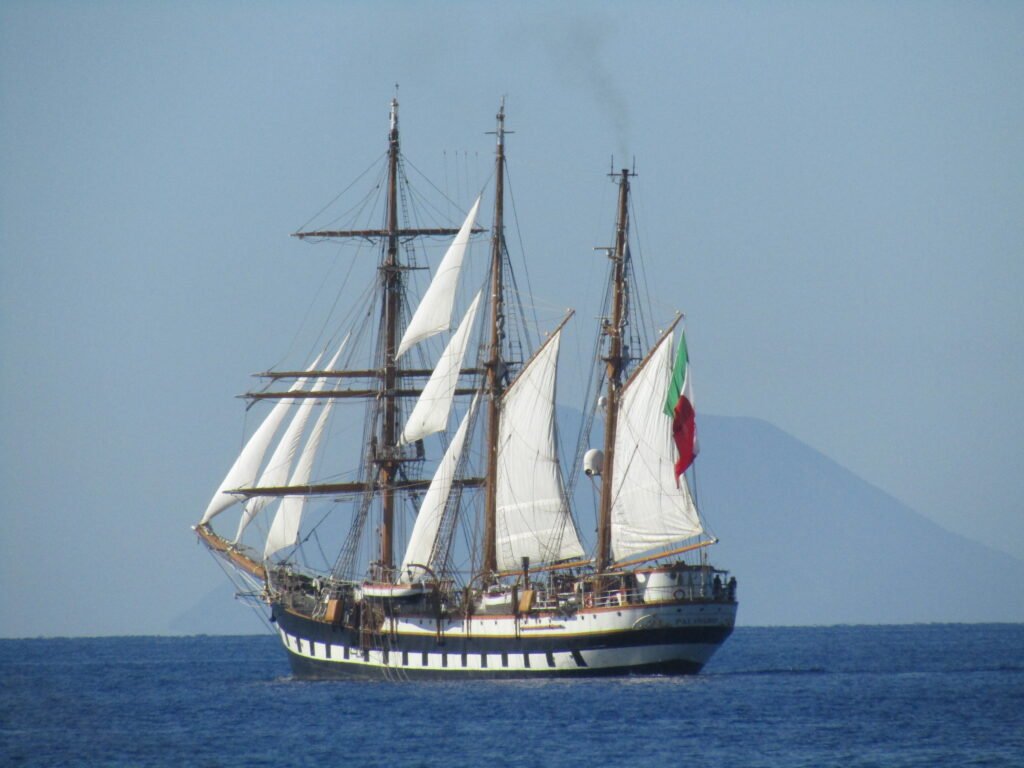
During her voyage towards Italy, Sudarshini conducted a Passage Exercise (PASSEX) in the Mediterranean Sea with ITS Palinuro, the Italian Navy’s renowned sailing training ship.
The rare and evocative meeting saw the two vessels communicating and manoeuvring together, and the sailors practising the language of the sea.
Livorno is a perfect setting to host INS Sudarshini – both as a historic maritime gateway, and home to one of Italy’s foremost training institutions for naval officers, the Italian Naval Academy.
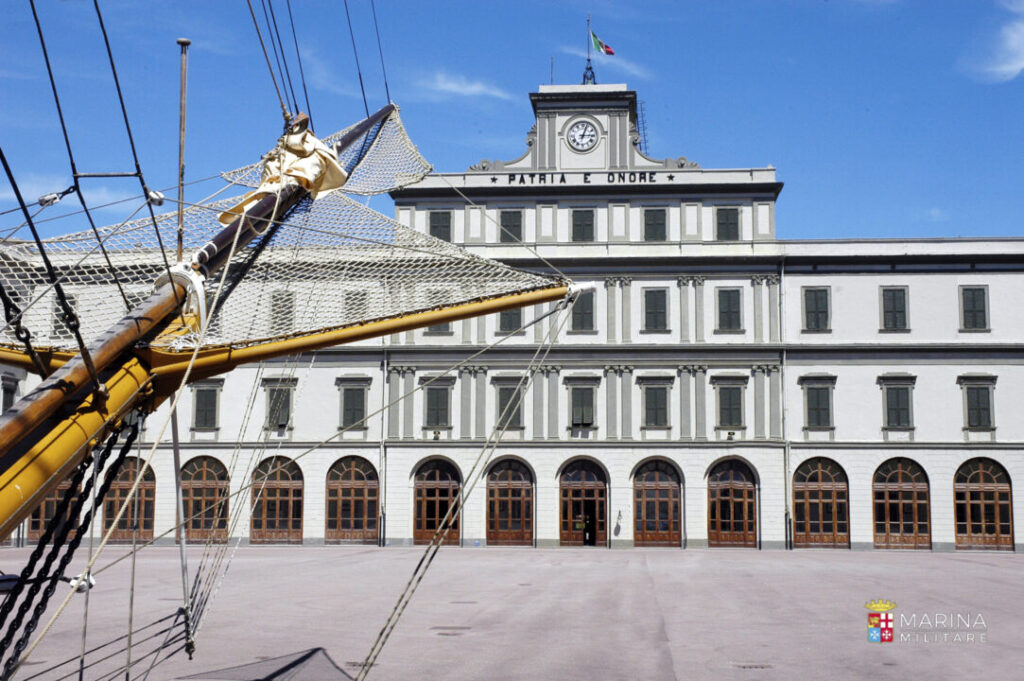
The interaction between Indian cadets and young Italian naval officers is a valuable opportunity for both sides and reinforces naval diplomacy.
A maritime relationship rooted in history
India’s maritime engagement with the wider world is rooted in history with Indian sailors and merchants traversing the Arabian Sea and the Indian Ocean, to connect the Indian subcontinent with the Arabian Peninsula, East Africa and the Mediterranean.
India and the Roman Empires engaged in ancient maritime trade exchanging spices, textiles, precious stones, for gold and other goods.
The Mediterranean and the Indian Ocean are part of an interconnected global maritime system.
As nations prioritising global trade and supply chains, India and Italy seek secure, resilient and open sea lanes, routes and maritime spaces.
Italy’s concept of Indo-Mediterranean envisaged the Indian Ocean, and Indo-Pacific as part of their larger maritime neighbourhood.
India occupies a central position in the Indian Ocean, through which a substantial proportion of global trade and energy flows.
India’s maritime vision is articulated through MAHASAGAR or Mutual and Holistic Advancement for Security and Growth Across Regions, which reflects the belief that maritime security and economic prosperity are mutually reinforcing.
It encompasses maritime security and domain awareness, humanitarian assistance and disaster relief, search and rescue, capacity building, protection of maritime infrastructure, environmental stewardship, and the sustainable development of the blue economy.
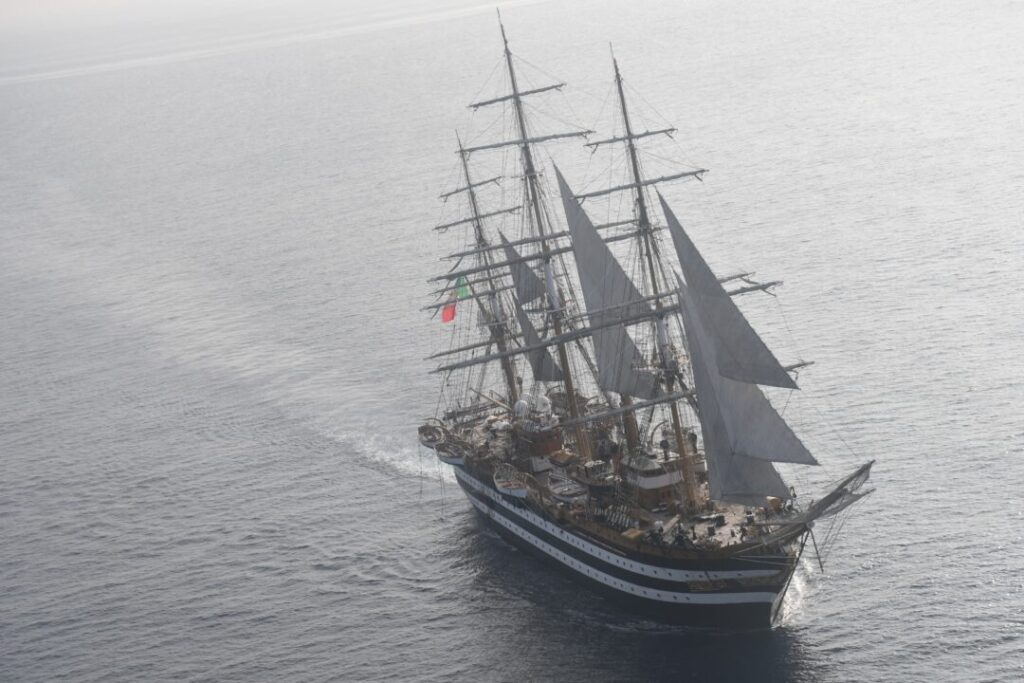
This strategic vision was implemented with visits to India and the Indo-Pacific by Italian naval ships, especially aircraft carrier ITS Cavour and the magnificent sailing ship Vespucci.
India’s increasing engagement with the Mediterranean and focus on maritime cooperation is reflected in Indian naval vessels docking at Italian ports in recent years.

Defence and security are important pillars of our bilateral ties which were elevated to a Special Strategic Partnership during the visit of Prime Minister Narendra Modi to Italy in May 2026.
We will soon launch a Maritime Security Dialogue to brainstorm about common priorities and initiate collaboration.

The India–Italy Defence Industrial Roadmap for 2026-2035 will guide business collaborations including co-production in the maritime and other domains.
The sea as a shared strategic space
The global maritime domain is facing challenges that transcend national boundaries: piracy, trafficking, illegal fishing, maritime terrorism, environmental degradation, natural disasters, threats to critical infrastructure and disruptions to global supply chains.
India advocates freedom of navigation, respect for international law, peaceful resolution of disputes and cooperation among maritime nations.
Italy which shares these values, is a natural partner with its rich maritime expertise in shipbuilding, marine engineering, ports, ocean technologies, maritime education and naval operations.
India–Italy maritime partnership connects our navies, maritime institutions, industries, and our people.
INS Sudarshini’s voyage to the Mediterranean and visit to Livorno is not just another port call, but a new chapter in our maritime cooperation.
The winds that fill her sails will carry with them our shared hopes for peace, partnership and prosperity across the seas.
Her visit will foster enduring friendships among the naval officers and young sailors of our two countries.
Let us wish her “Fair Winds and Following Seas”.
* Ambassador of India to Italy
©RIPRODUZIONE RISERVATA