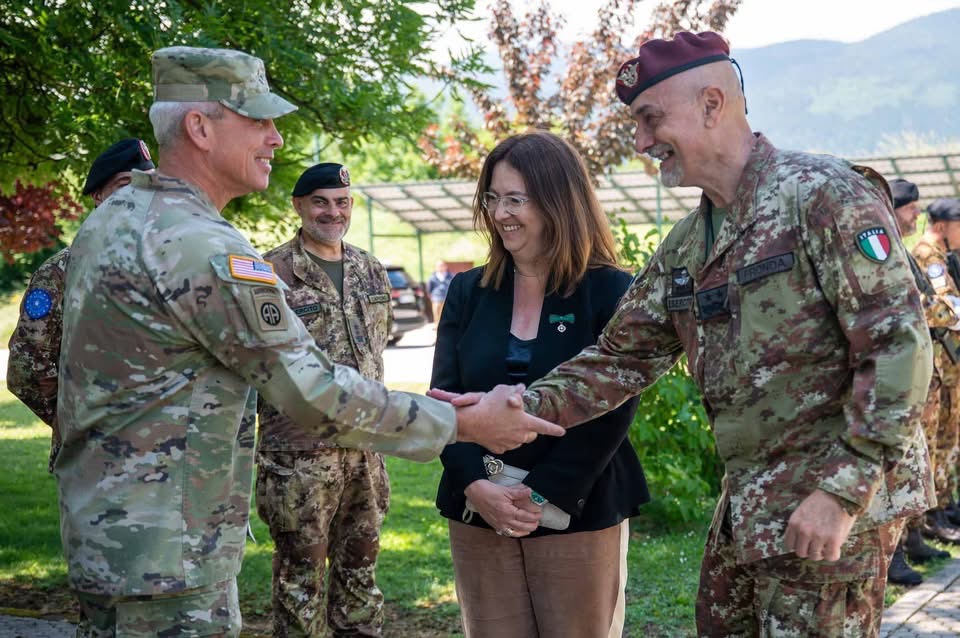
SARAJEVO (from our correspondent). At NATO Headquarters in Sarajevo (Bosnia and Herzegovina), photos of the Atlantic Alliance’s various commanders displayed on a wall tell the story of the organization’s presence in this part of the Balkans.
NATO was initially present through the Implementation Force (IFOR), led by two American admirals.
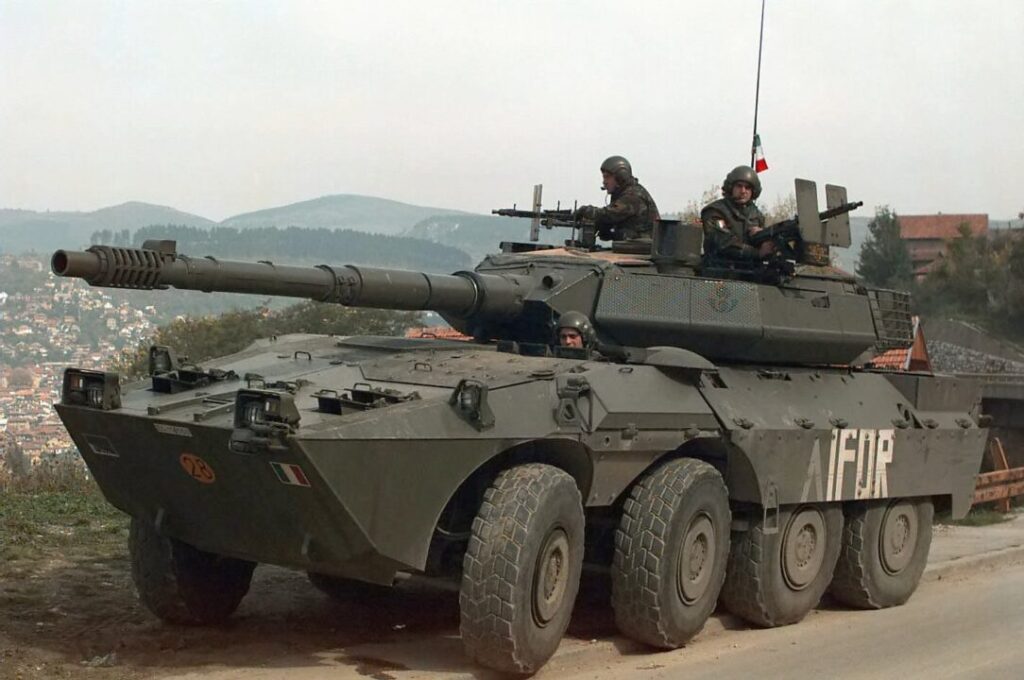
Its mandate lasted only one year (from December 20, 1995, to December 20, 1996, under the codename “Operation Joint Endeavor”, to implement the peace agreement in Bosnia and Herzegovina as the successor to the UNPROFOR United Nations Force).
It was the largest military mission in the history of the Atlantic Alliance, involving approximately 60,000 troops from various member nations.
Then came SFOR (Stabilisation Force).
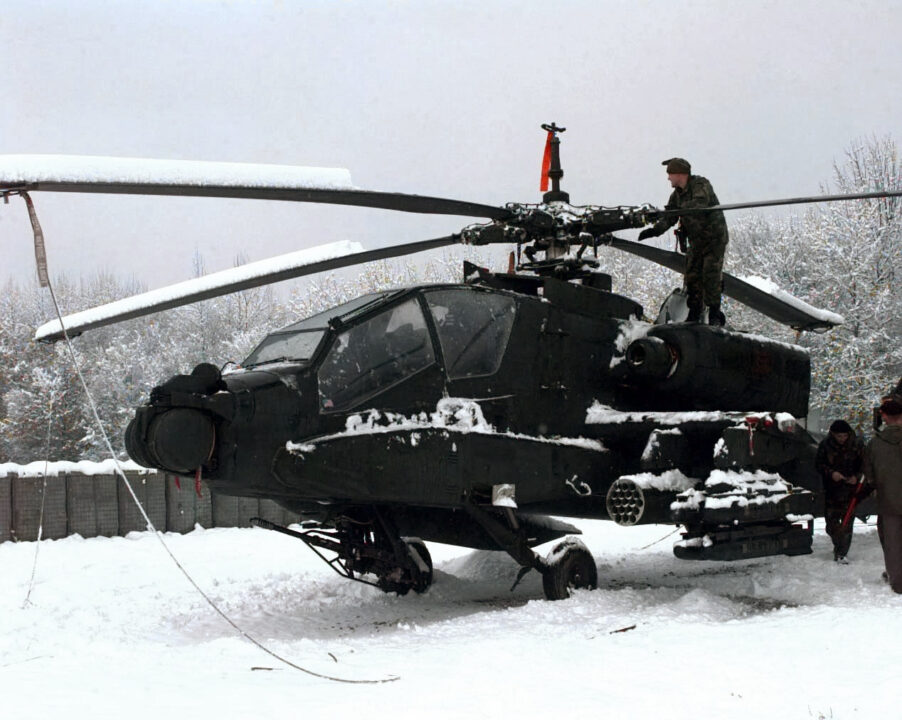
This multinational force was deployed in Bosnia and Herzegovina to uphold the Dayton Accords.
Over roughly eight years of activity, it conducted Operations “Joint Guard” (December 21, 1996 – June 19, 1998) and “Joint Forge” (April 24, 1998 – December 1, 2004).
The SFOR contingent was reduced over time, dropping from a strength of 12,000 troops in 2002 to approximately 7,000 two years later.
At the 2004 NATO summit in Istanbul, a decision was made to terminate the mission, and its activities were transferred to the European Union’s Operation “Althea” (December 2, 2004).
What, then, does NATO’s presence in this part of the Balkans represent today?
Report Difesa conducted an exclusive interview with Brigadier General James “Jamie” C. Fowler, who has commanded NATO Headquarters in Sarajevo since May 15.2026.
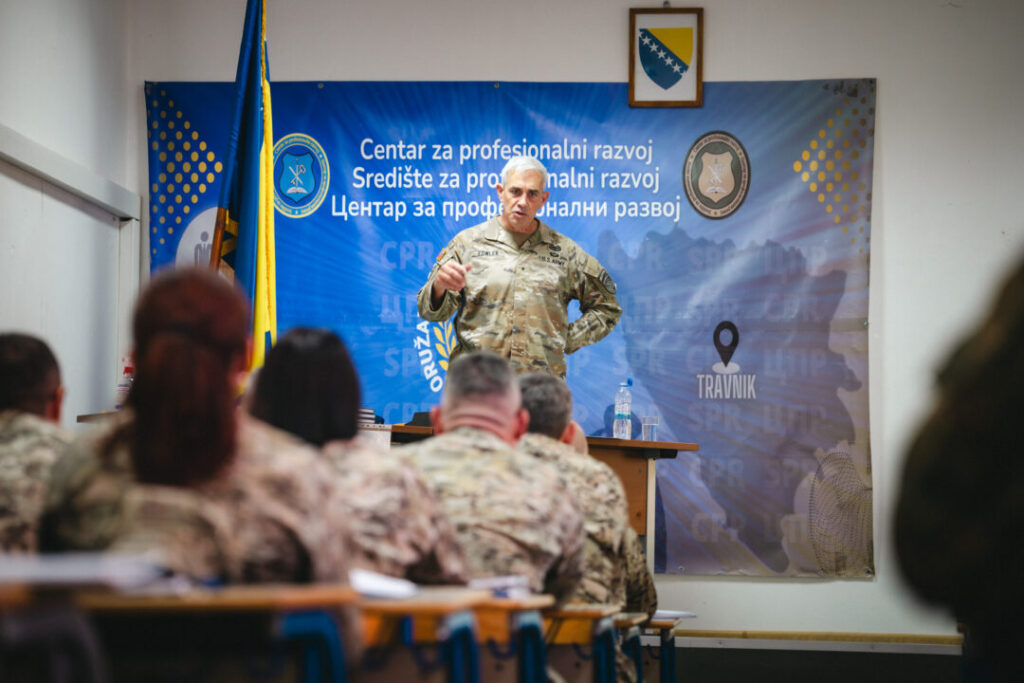
More than 30 years after the end of the war in Bosnia-Herzegovina, what is NATO’s role in the country today?
Thirty years ago, NATO showed up here after the signing of the Dayton Peace Accords, with about 60,000 troops, which started out as the Implementation Force, IFOR.
A dozen or so countries contributed to it, primarily at the beginning to stop the killing, stop the fighting.
This is the first time that NATO had a mission like this.
NATO was built to deter the Soviet Union, and this ensuring the peace was something new for NATO.
Until 2005, NATO had a role that provided the safe and secure environment for Bosnia-Herzegovina, and in 2005, we signed the Berlin Plus Agreement.
NATO switched its mission to Defense and Security Sector Reform. (DSSR)
So, this is what we’ve been doing the last 20 years.
We’ve been strengthening institutions, ensuring transparency amongst the Ministry of Defense, the Ministry of Security, and building capability within the Armed Forces, so that they are a credible, reputable force, and I think we’ve seen that they’ve been credible and reputable for providing security outside of the Armed Force or outside of Bosnia-Herzegovina, in support of NATO-led missions such as international security assistance, Afghanistan, and in Iraq during Operation “Iraqi Freedom”.
What value do the Balkans have at this moment in history, compared to the years of the conflict?
The value of the Balkans is several different things, valuable to different people in different ways.
Downtown Sarajevo you can walk and you can see where East meets West, right?
So, this has always been a transition zone, kind of what they call the gap, that it’s ripe for competition. So, right now we see competition, East versus West, Eastern values versus Western values.

For us in the West, it’s valuable that there is a stable and secure Western Balkans, because what happens here reverberates all the way across Europe, and with how things are going in Europe today, fighting in Europe, Russian aggression against Ukraine.
We cannot afford an unsecure or unstable Western Balkans.
I believe for the people here, the alignment to the West is the security that it will bring.
Partnering with NATO, partnering with the EU, partnering with EUFOR will provide stability and security to this country, which lends opportunity for prosperity.
So, foreign direct investments are important for the country.
For example, the United States is building a Southern Interconnection pipeline which will bring Western fuel and gas into the country.
So, things like this, the investment from the Western world would not be possible without the security and the stability of the country, and this security and stability provides opportunity for the people here.
Many times, I’ve talked to the individuals here and they say, well, my kids left, you know, they had to go to Germany or somewhere else in Europe or go over to the United States because there was no opportunity here.
So, the stability, the security, the prosperity allows opportunities for the kids to remain in the country.
So, this is why we’re here, this is why we continue to be a partner with Bosnia and Herzegovina and, to ensure the opportunity, and ideally, you know, the political stars will align and we would get greater cooperation, greater integration with Western institutions.
What are the differences between your mission and the Kosovo KFOR mission?
So, similar but different, really. I spoke to you about our mission here being primarily defense and security sector reform.
KFOR proper has the safe and secure environment mission inside of Kosovo.
NATO has the whole mission inside of Kosovo.
The KFOR monitors the border. They work with the Kosovar Police to ensure that it remains safe and stable, much like EUFOR does for Bosnia and Herzegovina.
Inside it is a much smaller organization, a lot less known as the NATO Advisory and Liaison Team, which works directly with the Ministry of Defense and the Kosovar Security Forces on defense and security sector reform.
The two missions are similar, just different ways we cut up the pie and execute the mission there. The overall goal in this mission is ensuring the stable western Balkans.
So, we do them differently, but the end result that we need to go forward with is the same.
At the entry of your building, there are many documents about the Dayton Accords. And now, these Accords have been completed or not?
We’ve come a long way since the implementation of Dayton. We, NATO, came in and provided security.
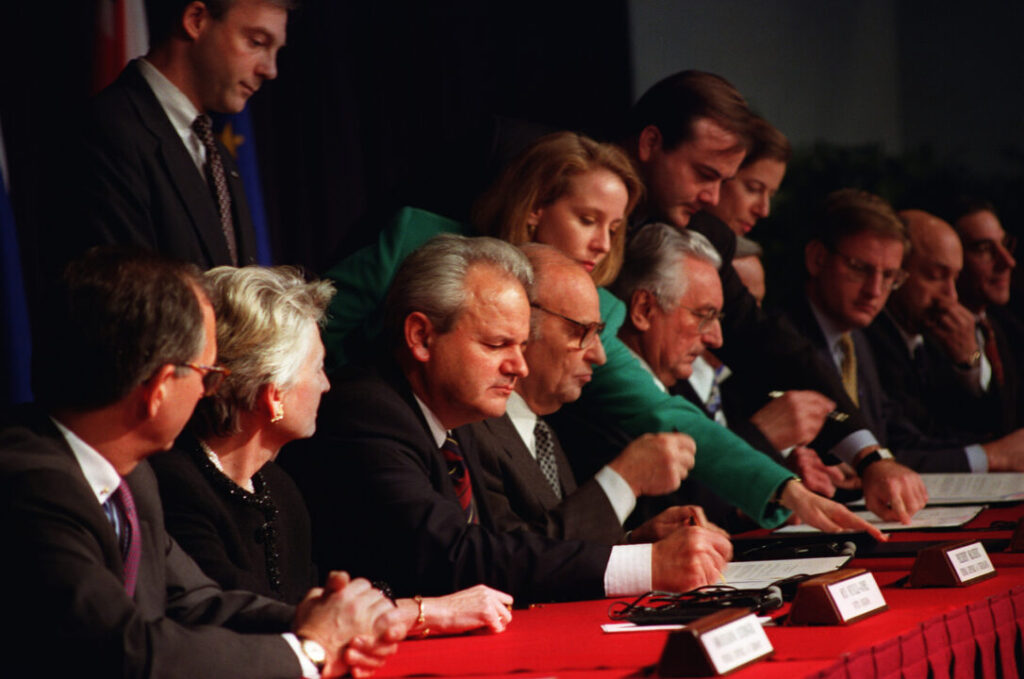
We combined three armies of the three constituent people here into one army, the Armed Forces of Bosnia-Herzegovina in 2006.
This has been successful, and by most accounts, is probably the biggest accomplishment that Bosnia and Herzegovina have made since then.
In 2016, there was a major defense reform to take this new army and transform it into a modern force so that it works for the people here. This also means stronger cooperation with the civilian sector. There’s work that needs to be done going forward with it.
Let me also mention the Peace Implementation Council Steering Board, which is run by the Office of the High Representative (OHR).
The formal condition for closing of the OHR in BIH is the complete fulfillment of the “5+2 Agenda”. For us, one of those conditions is the resolution of defense property, which we’re working on. It’s not an easy task, as it is political in nature.
Commander, in Kosovo, KFOR, make many exercises with the local troops and NATO troops. Here, there are exercises with the Bosnian troops and the NATO troops or not?
We do not have a NATO exercise in Bosnia-Herzegovina right now. However, there are bilateral joint exercises between individual NATO Allies and BiH Armed Forces.
For example, the United Kingdom will have one this November, and then the United States will have one in the spring with different parts of the armed forces.
What we do have coming up next month is a certification of the Armed Forces of BIH in accordance with NATO standards. It’s what we call NATO evaluation level two.
So, one Light Infantry Battle Group, which consists of around 800 or so people, Military Police formation, and an Explosive Ordnance Detachment, (EOD) formation will go through a NATO certification exercise.
Upon successful completion of this NATO exercise, they will be fully validated to deploy worldwide in support of NATO operations and other missions like the peacekeeping mission in Gaza.
So, what the BiH Armed Forces will work on and will accomplish will give them credibility for being strong, professional and trained. We’re very excited about this and look forward to a successful outcome towards the end of next month.
The primary mission of your NATO is to advise and assist all institutions and the NATO partnership for peace activity. Can you explain your activity?
We’ve had a long partnership with Bosnia and Herzegovina and there have been many steps along this process that we have done.
Bosnia and Herzegovina have been good partners with us, and we have worked together through a lot of issues.
Let me emphasize that everything that we have done and all the steps that BiH has moved through have been at the request of BiH authorities. They were keen on the 2006 formation of the armed forces.
We just helped them do it. They were keen on the 2016 Defense Review we just helped them along the way.
They were keen on joining the Membership Action Plan in 2010 and submitting their Reform Programme. So, we have worked alongside them.
There are a couple of things that we’re working through now, one of them is the budget for the armed forces of BIH.
About 0.7 percent of the GDP goes to the Armed Forces for their yearly budget, and I would say out of that, about, 88 to 90 percent of it, goes to paying allowances for personnel.
That leaves a very little amount to modernize the army, to give operational funds to buy fuel, spare parts so that they can continue training.
So, what we will do this year as the new government is seated and, you know, having a new Defense Minister in, a new Council of Ministers, we will work with the Fiscal Council to look for an increase in the budget.
We do not expect any changes until 2028. We’re looking for smaller incremental changes, and I mentioned 0.7 percent of the budget GDP.
You know, as you’re probably aware, for NATO partners and, Bosnia and Herzegovina as a NATO partner, 2 percent of the GDP is the standard for a NATO partner.
A full Alliance member is 3.5 percent with another 1.5 percent – 5 percent total, with like infrastructure improvements and those types of things.
Let me put that in perspective with the neighbors. This is about 8 percent of Serbia’s defense budget, and it’s about 10 percent of Croatia’s defense budget.
So, there’s a lot of room for improvement.
We’re very proud, with this NATO certification I talked about.
You know, when the AFBiH have the resources, they’ve got a very professional force, and they’ve got a very competent force, and they’ve got strong leaders, and the ability to provide security to the greater alliance outside of Bosnia and Herzegovina.
But inside of Bosnia and Herzegovina, they are very confident in support to civil institutions, support to the Ministry of Security, and support to the citizens of Bosnia and Herzegovina.
I’ve been very proud of them this year. They’ve coped with this year’s fire season in a tremendous way, with many missions, many hours of flying helicopters and dropping water into the mountains, stopping and fighting the fires.
One of the capabilities that was developed in partnership with Croatia, in partnership with NATO, Science for Peace and Security (SPS), and in partnership with MIT Lincoln Labs out of the U.S. is the ability Next Generation Incident Command System (NICS), which provides a common operational picture from the Ministry of Security to the entities, to the municipal levels, and to the Armed Forces of BIH.
This common operational picture allows Agencies to prioritize where we need to send assets, where the Ministry of Security deploys the assets in coordination with the Armed Forces of BIH to make sure that we’re sending the right people to the right place at the right time.
And we look forward to expanding this program down to a greater number of municipalities in Bosnia and Herzegovina.
We look for greater coordination between the military and the Ministry of Security and the entities and the municipalities.
And we look to push greater training and a joint exercise between the state, the entities, and the armed forces so that we can respond and support the citizens better in the future. So, we are real excited about this and, look for greater positive outcomes in the future.
And the second mission is to provide logistics. What is this activity?
In 2005, when NATO transitioned the safe and secure environment mission to EUFOR, we signed the Berlin + Agreement, which directed tasks to both organizations.
One of our tasks were that we would provide the logistical support.
We have, like, infrastructure improvements, infrastructure repairs, that is all done, funded on a cost share basis with EUFOR in the Camp.
We also provide IT support for them.
In real world practical situation, if there was a need for more forces to come in, we would provide that support to EUFOR so that we can receive them, stage them here, and then provide onward movement out to the locations within Bosnia and Herzegovina so that they can do their missions and support a greater safe and secure environment.
The recent “Quick Response Exercise” has given us a good chance to evaluate ourselves to make sure that we have the proper people, proper processes in place, and proper coordination with EUFOR so that we can provide services in a timely manner.
We are excited about the future with the continued engagement and integration with EUFOR.
Commander, why the presence, the NATO presence here in Bosnia and Herzegovina, in the Balkans, is very important for the Europe and for the world?
It goes back to what we already talked about. We’re talking about values here, right? And, you know, it is valuable for Europe.
It is valuable for the world to ensure that there’s a safe and secure environment here.
In the Western Balkans, I mentioned that what happens here will reverberate all the way across the European continent.
For us being NATO, for EUFOR, for the European Union, it is necessary that we keep a safe and secure environment here.
And I think that this is why you’ve seen a commitment to this region over the last 30 years and working alongside, being good partners to the folks in Bosnia and Herzegovina, but also in the Western Balkans.
This is Europe and this area is key to making sure that we have a whole, free and stable Europe.
So, we will continue to focus on this area to maintain peace and security.
©RIPRODUZIONE RISERVATA