
BELGRADE. Branko Ruzic – between politics and time
Born in Belgrade, Zemun in 1975, Branko Ružić grew up between different worlds. He spent part of his childhood in Australia, where his father served as a diplomat, getting to know as a boy what life looks like outside the borders of the former Yugoslavia.
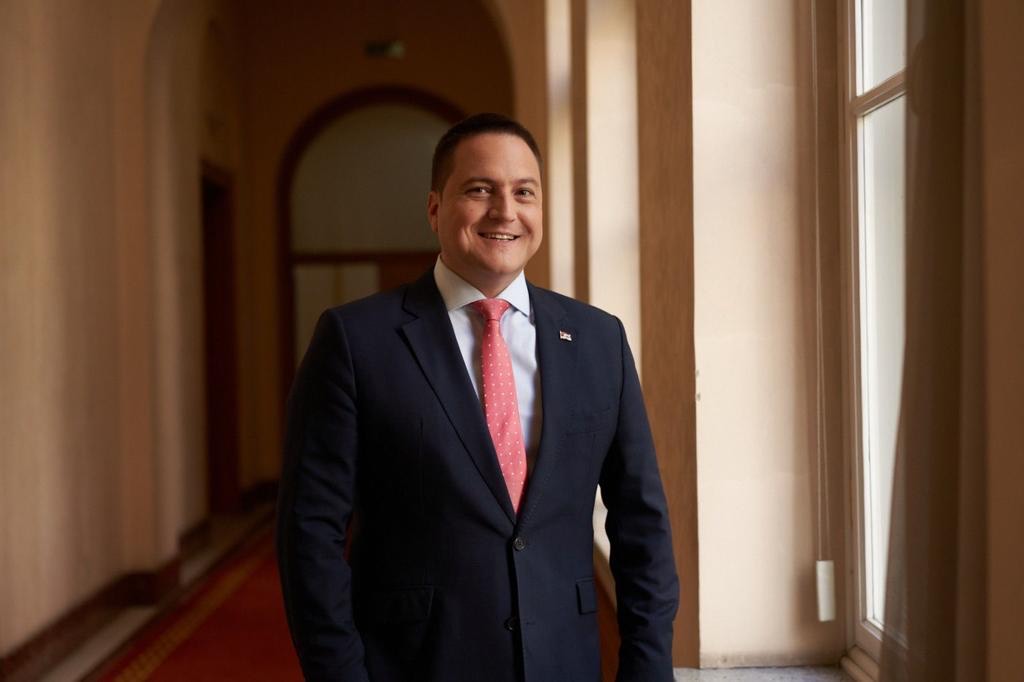
The return to Serbia marked the beginning of the path that would lead him into politics.
He studied international relations at the Faculty of Political Sciences in Belgrade, where he held a position of student vice dean, and already during his student days he showed an interest in public life.
He joined the Socialist Party of Serbia, believing that political influence is built through patience, organization and work within institutions.
His rise was gradual.
From the president of the Young Socialists and spokesperson of the party, to deputy and head of the parliamentary group, president of Executive Comitee, party vice president on several occasions, Ruzic has built a reputation as a politician who rarely raises his voice and with strong reputation and high integrity, but carefully chooses the moments when he will state his position.
Over the years, he held several ministerial positions, including the departments of European integration, state administration and local self-government, and then education.
As Minister of Education, he faced one of the most difficult moments in the modern history of Serbia. After the tragic events at the “Vladislav Ribnikar” Elementary School in May 2023, he came under strong pressure from the public. A few days later, he resigned, citing a sense of moral responsibility. That move remains one of the most notable decisions of his political career.
Ruzic’s political biography was accompanied by occasional differences of opinion in relation to other representatives of the government, which is why he was often described as a politician who tries to keep his own space for public expression.
Nevertheless, he remained a long-time member of the Socialist Party of Serbia and one of its most recognizable officials.
His story is not one of sudden ascents or spectacular reversals. It is the story of a man who remained present in the political life of Serbia for more than two decades, going through different roles, successes, criticisms and challenges.
Like many politicians, he left a mark that some evaluate positively, others negatively, but which cannot be observed outside the broader political and social context of Serbia at the beginning of the 21st century.
We talk about these and other topics with a politician of the younger generation who unwaveringly introduces modern political culture into the Serbian political swamp.
Serbia is facing elections today. Your personal views, as the vice-president of the Socialist Party of Serbia, which is a coalition partner with the party of President Aleksandar Vucic, differ from the views of the Government and the position of your party. What do you expect from the upcoming elections as the Socialist Party of Serbia?
My positions are fully consistent with the political tradition of the Socialist Party of Serbia. On the contrary, they are rooted in the conviction that the SPS must preserve its own identity, dignity, and the very purpose of its political existence.

Participation in a governing coalition does not deprive any political party of the right to express its views, nor should it reduce a serious political organization to the role of a silent observer.
The Socialist Party of Serbia should contest the elections independently, under its own name, with its own programme and its own candidates.
Citizens deserve to know what the Socialists stand for and how they differ from other political parties.
A party that has existed for decades must not reduce its political future to waiting for others to determine how many places it will receive on an electoral list.
From the forthcoming elections, I expect an honest confrontation with reality. They will provide an opportunity to determine whether the SPS still possesses the courage to rely on its own membership, its voters, and its political principles.
I believe it does but it must first demonstrate that confidence to itself.
Since 2012. when changes has come on elections, it seems that Serbia has moved away from the EU. Is it possible to align goals and go the joining route? And are there any other solutions Serbia should choose on new world political era?
Serbia has not formally abandoned its European path, but it has lost valuable time, political momentum, and credibility. European integration does not advance through public statements or occasional expressions of goodwill. It progresses through reforms that citizens can experience in their daily lives—in the judiciary, education, healthcare, the media, and in the way public institutions serve them.
For Serbia, membership in the European Union is a civilizational, economic, and institutional choice.
The overwhelming share of our trade, investment, and economic activity is linked to Europe.
Our young people pursue opportunities in European countries, while our legal and economic systems have been aligning with European standards for many years. Abandoning this course would leave Serbia facing prolonged political and economic uncertainty.
Serbia should continue to develop constructive relations with the United States, China, Russia, and all other countries with which it shares mutual interests. However, its strategic orientation must remain clear. A country that attempts to move simultaneously in several opposing directions ultimately risks finding itself without a clear direction at all.
The European Commission’s negative report on the situation in Serbia went unnoticed by the Serbian public and medias, although it is a very important message that something needs to change. What is the political situation in Serbia really like in your opinion?
Serbia is facing a profound crisis of public trust. Citizens increasingly doubt that institutions operate independently, that the rule of law applies equally to everyone, or that they can freely express their political views without fear of consequences. Such a situation is more dangerous than any individual confrontation between the government and the opposition.

Reports issued by European institutions should not be interpreted as acts of hostility towards Serbia.
When they raise concerns regarding electoral conditions, media freedom, the independence of the judiciary, corruption, or the treatment of civil society, they are addressing issues that Serbian citizens themselves have been highlighting for many years.
Political stability is not measured by rallies, television appearances, or parliamentary majorities.
True stability exists when citizens trust their institutions and when those in power understand that democratic change through elections is both possible and legitimate.
Serbia needs fair electoral conditions, freer media, a clear distinction between the state and the ruling party, and a judiciary free from political influence.
These are reforms we owe to ourselves, regardless of Brussels’ assessment.
A student movement appeared in Serbia as new political alternative, which mobilized a mass of people who are dissatisfied with the current political situation, but also with the opposition, which, it seems, does not know how to act. You, it must be admitted very bravely, decided to support the changes that students and citizens demand. Does that scare or encourage you?
I find this encouraging. Young people have restored to Serbian society the belief that the public interest, justice, and accountability still matter.
Their energy has demonstrated that apathy is not a permanent condition and that there are generations unwilling to remain silent in the face of challenges that will shape their future.
I have supported their right to express their views peacefully and to seek answers from public institutions. I have never attempted to appropriate their movement for political purposes, nor do I believe that any politician should. Students owe political allegiance to no one, and that independence constitutes one of their greatest strengths.
A politician who fears young people, their questions, and their freedom has already lost touch with society. A responsible government engages with them, while a responsible opposition listens to them.
Should they decide to put their ideas to the test through the democratic process, citizens will evaluate their programme and their representatives in the same way they assess every other political actor.
A special problem is the relationship with Kosovo and Metohija. Do you see it as a midterm or long-term solution of current situation in which Serbia finds itself with, as Serbia claims, the southern Serbian province?
There are no quick or simple solutions. Anyone who promises that the issue of Kosovo and Metohija can be resolved through a single document or a single political decision underestimates its historical, legal, and human complexity.

Serbia’s foremost responsibility is to safeguard the security, rights, and continued presence of the Serbian population in Kosovo and Metohija.
People must be able to remain in their homes, educate their children, use their language, protect their property and religious heritage, and live free from fear of arbitrary actions by the institutions in Pristina.
The establishment of the Association of Serb-majority Municipalities is a commitment that has already been undertaken and can no longer be postponed.
A lasting solution can only emerge through negotiations and a compromise that does not leave either side feeling humiliated or defeated.
Serbia has its constitutional and state position, but it must also pursue a realistic policy that preserves peace, prevents the further departure of the Serbian population, and leaves future generations the opportunity to live without the constant risk of conflict.
Any agreement must be supported by credible international guarantees and be capable of enduring political changes in both Belgrade and Pristina. An agreement that survives only for the duration of a single political mandate cannot be regarded as a durable historical settlement.
How do you interpret the military agreement signed between Croatia, Kosovo and Albania? Do you consider it a threat to regional stability?
Every country has the right to develop defence cooperation, but security agreements in a sensitive region must always be assessed in light of the broader political context, the parties involved, and the manner in which they are implemented.
Croatia and Albania are NATO members, while Kosovo does not have universally recognized statehood, and Serbia considers it part of its own territory.
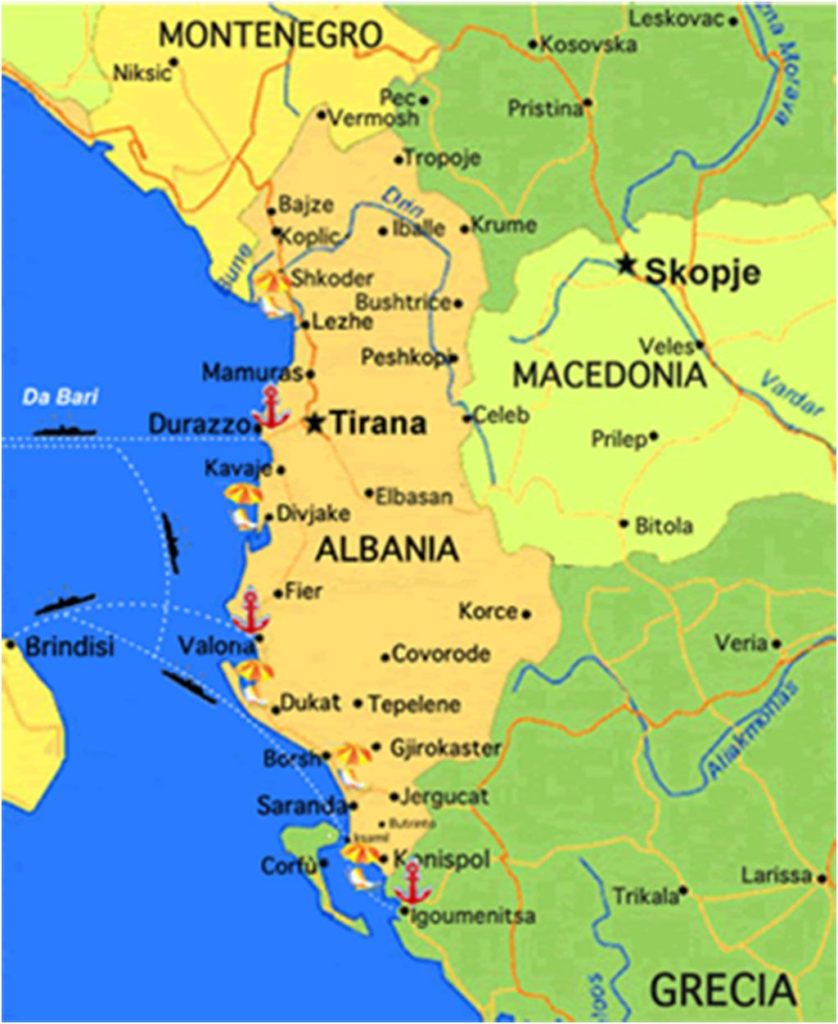
Therefore, from Belgrade’s perspective, this format cannot be viewed as an entirely routine form of cooperation.
Serbia should seek full transparency regarding the objectives, planned activities, and potential joint military exercises arising from such arrangements. Any statement that portrays Serbia in advance as a security threat would only deepen mistrust and create justified concerns.
Our response must be serious, responsible, and measured.
Serbia does not need a regional arms race; it needs strong defence capabilities, a professional military, developed military diplomacy, and continuous communication with neighbouring countries and international partners. Security is preserved through strength, but also through predictability.
You come from a family of diplomats. Even your appearances in public and in parliament give the impression of a measured and wise politician. Is diplomacy enough to resolve the accumulated problems in the region?
Diplomacy is the most rational instrument available to states, but diplomacy alone is not sufficient. It must be supported by political courage, reliable institutions, and the willingness to genuinely implement agreements that have been reached.
In the Balkans, compromise is often wrongly portrayed as weakness, while raising tensions is presented as patriotism. Experience has taught us, at a very high cost, how damaging such policies can be. A responsible statesman must be capable of explaining to citizens both the price of compromise and the far greater price of conflict.
Diplomacy does not mean abandoning one’s own interests. It means having the ability to protect those interests without jeopardizing the future of one’s country. For our region, that is the only reasonable and sustainable policy.
Can disagreements in the region, in addition to Kosovo and Metohija, there is also the Republika Srpska, as a separate entity in Bosnia and Herzegovina that gravitates towards unification with Serbia, be considered a problem that can only be solved through the EU, and is its role the most important?
The Republika Srpska is a constitutional entity established by the Dayton Peace Agreement and one of the two equal entities within Bosnia and Herzegovina.
Serbia has the right to develop special parallel relations with the Republika Srpska in accordance with the Dayton Agreement, while at the same time respecting the sovereignty and territorial integrity of Bosnia and Herzegovina.
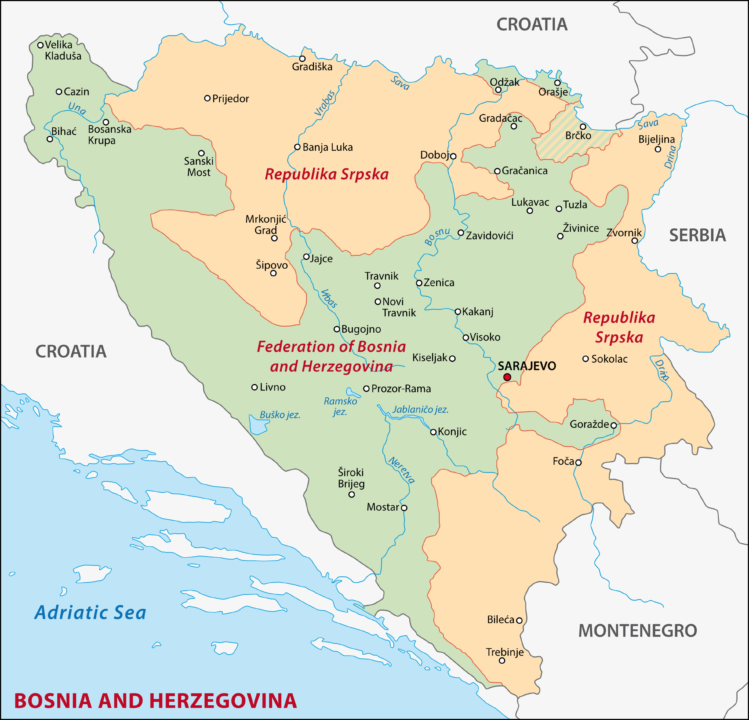
The unification of the Republika Srpska with Serbia is not the official policy of the Republic of Serbia. Such assumptions are often used to fuel political tensions. For Serbia, it is important to preserve the constitutional position of the Republika Srpska, as well as the equality of Serbs, Bosniaks, and Croats in Bosnia and Herzegovina. Attempts to abolish the Republika Srpska would be equally dangerous as attempts to undermine Bosnia and Herzegovina itself.
The European Union has a very important role, but a lasting agreement cannot be imposed solely from the outside. It requires the political will of the people living in Bosnia and Herzegovina, as well as consistent respect for the Dayton Peace Agreement.
Europe can assist, encourage, and provide guarantees, but the responsibility of domestic political actors remains irreplaceable.
Serbia has excellent relations with the Republic of Italy, economically and politically. Do you think that Italy and Serbia should deepen their relations even more and how to improve those relations even more?
Italy is one of Serbia’s most important political, economic, and cultural partners. Our relations are characterized by mutual understanding, a strong presence of Italian companies in Serbia, and a closeness that goes beyond day-to-day politics.
The next phase of cooperation should focus on technologically advanced investments, energy, transport infrastructure, the agri-food sector, cyber security, the defence industry, and stronger connections between small and medium-sized enterprises. Serbia should no longer present itself merely as a country with a lower-cost workforce, but as a reliable industrial, technological, and logistical partner of Italy.
There is also significant potential for further cooperation in education, culture, and tourism, as well as through stronger links between students, universities, and young professionals from Serbia and Italy. Italy can be one of the most influential advocates of Serbia’s European future, while Serbia, through its reforms, must provide its Italian friends with sufficient arguments to continue strongly supporting that perspective within the European Union.
Many see you as the political future. If you ever have the opportunity to become the Prime Minister of Serbia, what would be your first steps?
My first task would be to restore the Government to its constitutionally defined central role within the executive branch. Ministers must be accountable for their work, institutions must make decisions within their legally defined competences, and the public administration must serve citizens rather than political centres of influence.
I would form a government composed of competent and responsible people, with clearly defined objectives and an obligation to be accountable to citizens for the results achieved. Major state contracts and budget expenditures would be fully transparent, public enterprises would be managed by people selected on the basis of knowledge and performance, and the judiciary would finally gain full independence from political influence.
I would initiate a serious social dialogue with students, universities, trade unions, employers, the opposition, and representatives of local communities. Serbia is too deeply divided for any single political party to heal it alone. Special priority would be given to education, healthcare, social security, and a clearly defined plan to accelerate European integration.
The Prime Minister must lead the Government, assume responsibility, and be accountable to both Parliament and citizens. These simple constitutional principles must once again become a reality in Serbia.
The political organization to which you belong- the Socialist Party of Serbia- is the oldest in the country since the fall of communism in the late 1980s. Is it prepared to implement changes in organizational, ideological, and political terms?
The Socialist Party of Serbia no longer has the right to postpone change. A party that has survived so many historical transformations must be capable of understanding the challenges of the present moment. Our problem is not a lack of history, but an insufficiently clear vision of the future.
We need a new programme, greater internal democracy, open debate, and a much stronger role for young people, women, local party organizations, and experts. Socialist politics today must respond to growing inequality, insecure employment, unaffordable housing, the position of workers, the demographic crisis, the quality of public education and healthcare, and the consequences of technological change.
The Socialist Party of Serbia must independently define its policies and enter coalitions based on its programme, electoral results, and clearly established commitments. If our purpose is reduced to preserving a limited number of positions, we will lose far more than a single election cycle.
We will lose the very reason why anyone would vote for us.
Your political maturity was especially highlighted at the time when, as the Minister of Education, you resigned from that position without thinking after the unfortunate massacre in an elementary school in Belgrade, when nine students and a guard were killed. It is a rare case of one official take responsibility. Is this a political culture that many in Serbia should follow?
I did not resign because I believed that I was personally responsible for the tragedy. I resigned because a ministerial position carries moral and political responsibility that goes beyond criminal or direct responsibility.
At a time when families were burying their children, I believed that I had no moral right to hold on to the ministerial position and explain why I should remain. Public office is not private property. One accepts public office knowing that, alongside achievements, one must also bear the burden of the most difficult moments.
Political responsibility does not represent an admission of guilt. It represents respect for citizens, for institutions, and for one’s own conscience. Serbia would be a more orderly and responsible society if more public officials understood this distinction. If I were faced with the same moral decision again, I would act in the same way.
According to some polls we have seen, with you as a leader of party, the Socialist Party of Serbia would currently enjoy significantly greater support than it does now. Will the members of your party recognize this reality as opportunity and give you the chance to become its president?
Polls are important because they reflect public sentiment, but a party leader is not chosen on the basis of a single chart or a media headline. That decision belongs to the members, delegates, and official bodies of the Socialist Party of Serbia.
I do not seek a party position as a reward for my previous work. However, I will not avoid responsibility if the membership believes that I can restore trust, return the political independence of the Socialist Party of Serbia, and unite people around a clear party programme.
I respect everything Ivica Dačić has done for the survival and return of the Socialist Party of Serbia to relevant political life. At the same time, every serious political party must openly discuss its future leadership and political direction.
Personal ambitions should never be more important than the survival of the party, but neither can false unity be an excuse for remaining silent while a party loses its identity and public support.
If the members of the Socialist Party of Serbia wish me to assume that responsibility,
I will be ready to do so. I would not seek privileges, but rather a mandate to transform the party, bring together its best people, and once again make it a strong, independent, and serious political force in Serbia.
©RIPRODUZIONE RISERVATA