
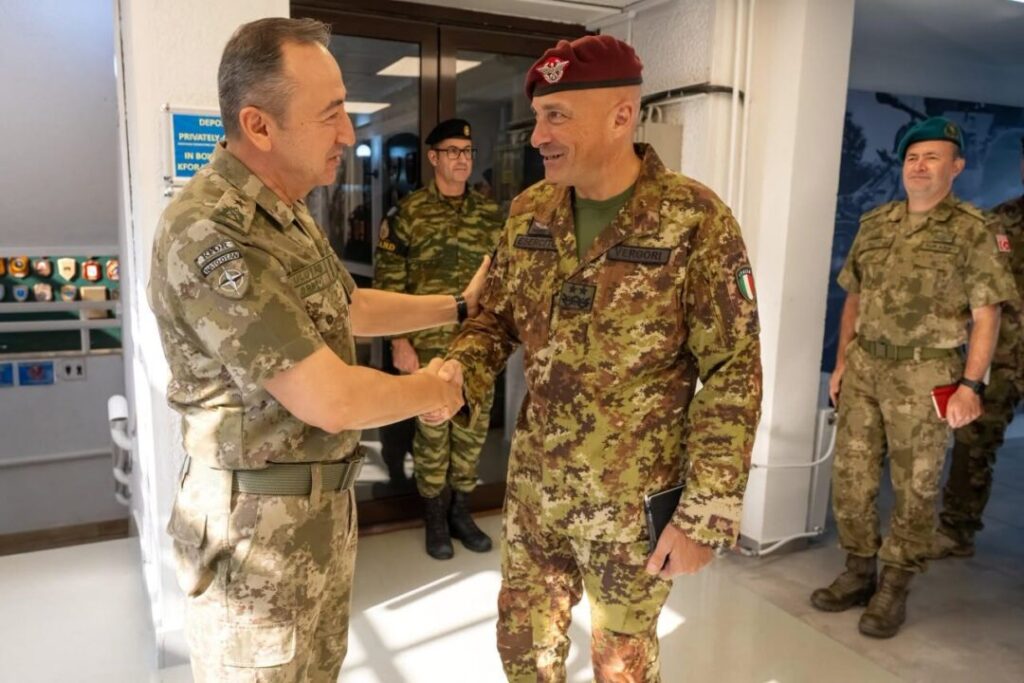
PRISTINA (KOSOVO). The Commander of the NATO-led Kosovo Force (KFOR) mission, Major General Özkan Ulutaş, welcomed a delegation of the incoming KFOR XXXI rotation, at KFOR Headquarters, in Camp Film City, Pristina.
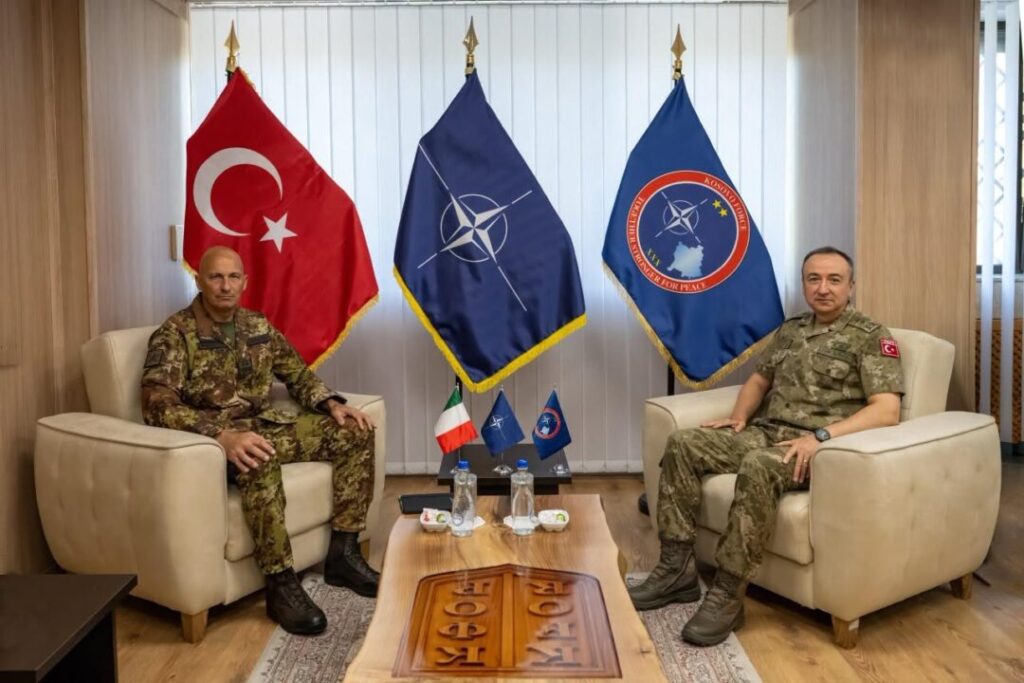
The delegation was led by Major General Roberto Vergori, from the Italian Army – who has been designated as the next KFOR Commander – and participated in the Key Leader Training programme.
Brigadier General Onur Çakıcı, from Turkish Army, the designated incoming KFOR Deputy Commander also participated in the programme.
This programme is aimed at familiarizing the upcoming leadership with KFOR staff and operational procedures. It is designed to ensure leadership continuity, maintain high operational readiness, and foster a shared understanding of the mission at all levels.
The Key Leader Training formally marks the beginning of the Hand-Over/Take-Over process between the current and incoming leadership.
It will be completed with a ceremony marking the Transfer of Authority, this autumn.
KFOR continues to implement its mandate – based on UN Security Council Resolution 1244 of 1999 – to contribute to a safe and secure environment for all people living in Kosovo and freedom of movement; at all times, impartially, and in close coordination with the Kosovo Police and the European Union Rule of Law Mission in Kosovo (EULEX), in their respective roles as security responders.
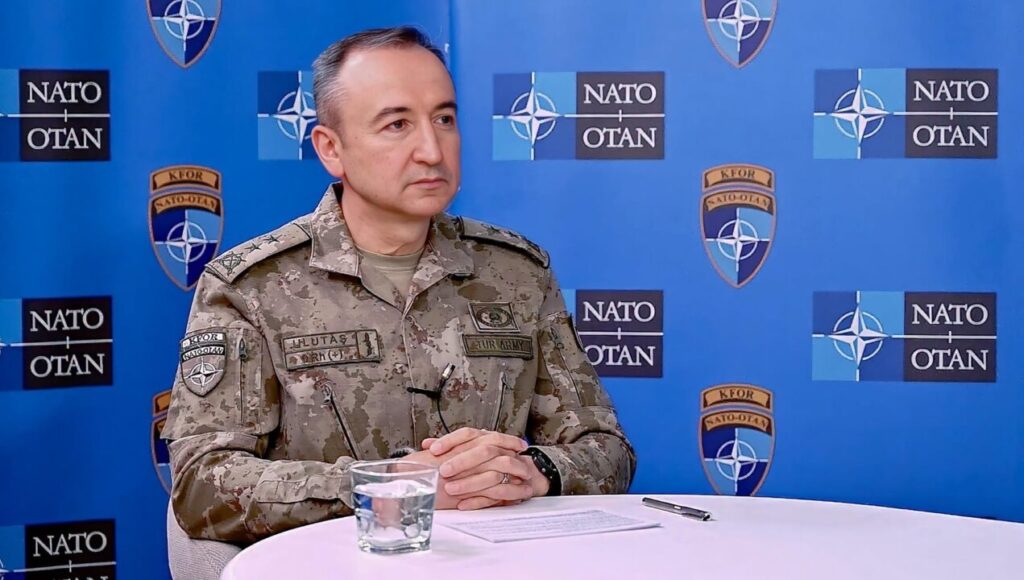
“KFOR’s commitment to the security of all people living in Kosovo is steadfast, as attested by a continued and visible presence of our personnel on the ground, including through regular patrols, observation posts and engagements with local communities – said Major General Özkan Ulutaş, Commander of the NATO-led KFOR mission -. As always, our daily activities will be conducted by taking into consideration the needs and concerns of all communities,” he added.
KFOR’s presence will increase in some areas, including but not limited to North Mitrovica and northern Kosovo. KFOR will continue to assess the situation on the ground regularly and to maintain a posture designed to contribute to lasting security for all people living in Kosovo.
In this regard, the gradual transition of KFOR’s permanent posture at the Ibar Bridge forms part of the wider optimisation process and reflects the improved security situation. “Decisions concerning KFOR’s presence at the Mitrovica Bridge are based on our assessment of the security situation – said Admiral George Wikoff, Commander of NATO’s Allied Joint Force Command Naples (JFCNP) KFOR does not have a mandate to determine whether the bridge should be opened or not. This is for EU and relevant Institutions in Kosovo to determine after KFOR concludes its permanent presence on the bridge.”
“KFOR personnel – he pointed out – will remain present in the surrounding areas.”
Law enforcement is not part of KFOR’s mandate. However, KFOR continues to cooperate closely with the security organisations in Kosovo, including the Kosovo Police, in accordance with the highest operational standards, and the principle of fair and equitable treatment of all communities.
The Kosovo Police is a lawful local law-enforcement institution whose institutional origins derive from the policing framework established under UNMIK authority, pursuant to UNSCR 1244. Its capabilities and responsibilities have evolved within that framework, and today it acts as the first security responder for civil law enforcement and public safety.
This role predates the current KFOR optimisation process, which does not constitute a transfer of KFOR’s mandate or responsibilities to Kosovo Police. KFOR retains its separate security mandate under UNSCR 1244 of 1999, and will continue to implement this long-standing mandate, fully and impartiall
©RIPRODUZIONE RISERVATA