Di Vincenzo Santo*
(Da FP – 25 settembre 2017)
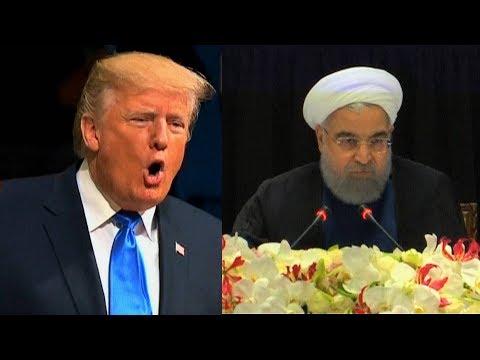
Washington. The Trump administration wants to ratchet up economic pressure on Iran, but unless it can persuade skeptical governments in Europe and Asia to join the effort, it will be forced to use unilateral measures that would probably prove ineffective at choking Tehran’s economy, former officials, diplomats, and experts say. With U.S. President Donald Trump facing a deadline next month to declare to Congress whether Iran is abiding by a nuclear deal, the administration has signalled plans for a tougher approach to the accord that could include fresh sanctions against Tehran or even triggering the reimposition of punishing sanctions that were lifted as part of the accord.
The other signatories to the accord – the United Kingdom, France, Germany, China, and Russia – strongly support keeping the nuclear deal in place and have made clear they oppose snapping back the sanctions that preceded the agreement. (…) If Trump decertifies Iran under U.S. law, Congress would have to decide within 60 days whether to reimpose an array of sanctions that were eased as part of the 2015 deal, which introduced limits on Iran’s nuclear program in return for lifting sanctions and freeing up frozen assets. (…) One of the hardest-hitting measures required other countries to significantly reduce their purchases of Iranian oil or else face U.S. sanctions. (…) Since sanctions were lifted at the beginning of 2016, Iran has clawed back much of its share of the global oil market. By August of this year, it was pumping as as much oil as it had in a year (3.8 million barrels a day) and exporting 2.5 million barrels a day to traditional buyers. Europe is the main destination for Iranian oil, followed by China, India, South Korea, and Japan. (…)

*Generale CA (Riserva)
© RIPRODUZIONE RISERVATA